


Teens Take Over Yom Kippur


Or Ami teens take over Yom Kippur, leading major parts of the Holy Day services.
In a silent sanctuary, the orchestra began playing the haunting melody of Kol Nidre. Two Torah processions moved slowly down the side aisles to transform the Fred Kavli Theatre into Congregation Or Ami’s sacred sanctuary for Yom Kippur.
Leading one procession were two teenagers: one carrying the Torah, the other walking beside her.
Usually such High Holy Day honors go to the adult leaders of a synagogue, the presidents and machers who have spent years carrying the community.
These teens, however, are already leaders: co-presidents of LoMPTY, Or Ami’s high school youth group, and senior madrichim, teen leaders in our Jewish education program. So why should they have to wait until adulthood before we again place Torah in their arms?
Jewish leaders keep calling youth “the future of Judaism.” Of course they are. And they are also “Judaism right now.”
That’s why at Congregation Or Ami, our teens carried Torah on Kol Nidre. And throughout Yom Kippur, from beginning to middle to end, we handed them opportunities to lead.
In the middle of the day, our teens led their younger peers.
Teens dressed as apples and honey welcomed families with young children into our Family Services. Others stepped up, co-leading services with our rabbis and cantorial soloist as singers and songleaders. One teen sounded the shofar so impressively that we asked him to return for one more assignment. (More about that later.)
Still other teens served as madrichim (counselors) in our High Holy Day Kids Camp, running simultaneously with Morning Services.
I love looking into the congregation and watching a little kid look up at a teen leader. Because to a six-year-old, that teenager is impossibly cool. The teen knows the songs. Knows how to make Judaism fun. Maybe even remembers their name.
And that teenager, often without realizing it, has become a Jewish role model. Maybe even someone that six-year-old wants to grow up to be.
L’dor vador, generation to generation. Because not so long ago, one of our older teens was looking up at someone else.

Then came Neilah, our Concluding Service, and the teens were front and center. It was late afternoon, the light outside beginning to change, stomachs growling, Yom Kippur slipping away.
One by one, our teens ascended the bimah to lead us in prayer.
This wasn’t a teen service in the youth lounge. They were leading all of us in the main sanctuary: children and parents, grandparents and livestreamers too.
Even their rabbis.
And I found myself listening differently.
We teach that our High Holy Day confessions are written in the plural. Ashamnu: We have sinned. Bagadnu: We have broken trust.
Always “we.”
And help us return.
Of course that “we” includes those of us who have been reciting these prayers for decades. It includes our teens too.
They have their own mistakes to mend. Their own questions about Judaism. Their own community to shape. Their own piece of this rather bruised world to repair.
They lead us through tikkun atzmi, repairing ourselves, so we can get on with tikkun olam, repairing our world.
Rabbi Elana Rabishaw, who oversees Or Ami’s youth and education work, watched them too.
“Our teens have a lot to say,” Rabbi Elana reflected. “When they lead, we get to hear their voices, their ideas, their hopes. I watch them assume significant roles over the High Holy Days and I feel excited about the Jewish community they are already helping to create.”
That’s what we are trying to do at Congregation Or Ami.
Too often we tell teenagers, “Someday this will all be yours.”
At Or Ami, we’d rather say, “Come up here. We need you now.”
It takes intention to make that happen. Adults willing to step aside sometimes. Rabbis and educators who take teens seriously. Youth professionals and volunteers who keep showing up. And generous people who understand that if we want our teens to embrace Jewish life, we need to create Jewish experiences worth embracing.
You could see what that intention made possible all through these High Holy Days:
In an apple costume welcoming our youngest families.
In a little child looking up at a teen counselor.
In a twelfth grader carrying Torah down the aisle on Kol Nidre.
In our teens standing on the bimah at Neilah, asking God, along with the rest of us, to keep the gates of repentance open just a little longer.
And then there was our young ba’al t’kiah (shofar blower). This eleventh grader had so impressed us at the Family Service that we invited him back.
At the very end of Neilah, as we awaited the final blast that would send us back out into the world, he lifted the shofar. Hundreds of us stood waiting.
Could someone this young handle such a significant ritual responsibility?
We called out: Tekiah gedolah!
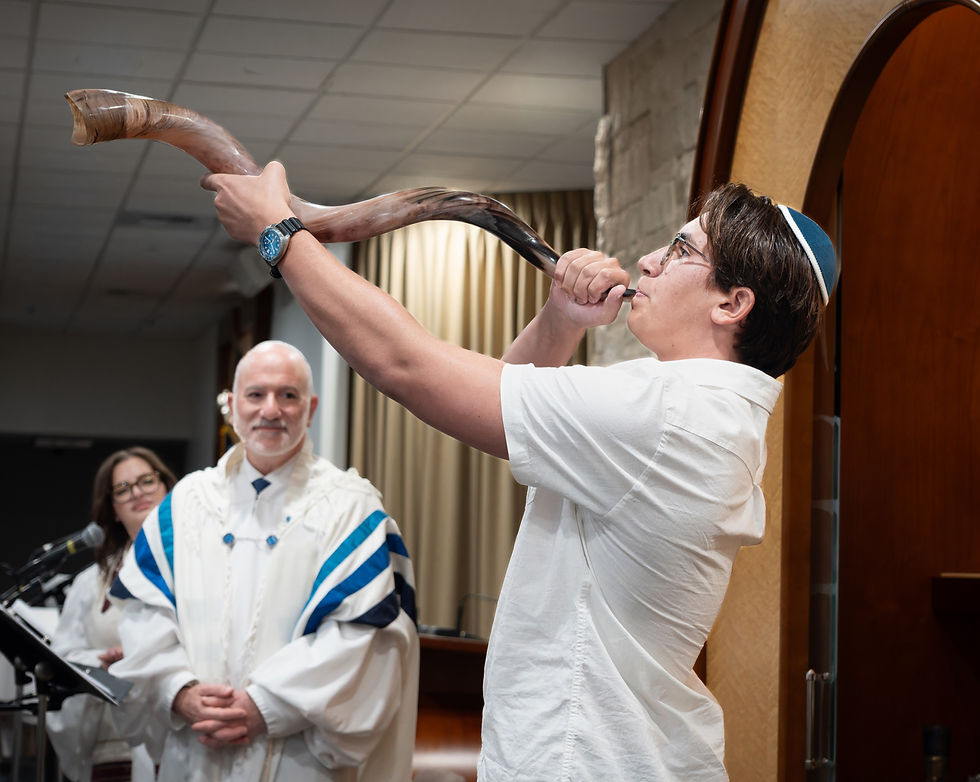
He blew.
Long. Clear. Strong.
Debbie Friedman z”l sang the prophet Joel’s vision:
“Your old shall dream dreams,
but your youth shall see visions.”
Standing there, listening to that eleventh grader sound the final shofar of Yom Kippur, I thought about the Torah procession on Kol Nidre.
Torah in their arms.
Prayer on their lips.
Shofar in their hands.
Now one of them was sounding us back into the world.
Maybe we shouldn’t wait for our teens to become Jewish leaders.
Maybe we need to move over and make room.
We thank the Harry and Judy Friedman Youth Enrichment Fund, which helps our teens travel together, share experiences, and build relationships with each other and Jewish adult role models, and the Caring Community Foundation, whose generous grant helps us bring teen leadership more deeply into the life of Or Ami.
Photos by Michael Kaplan


Comments